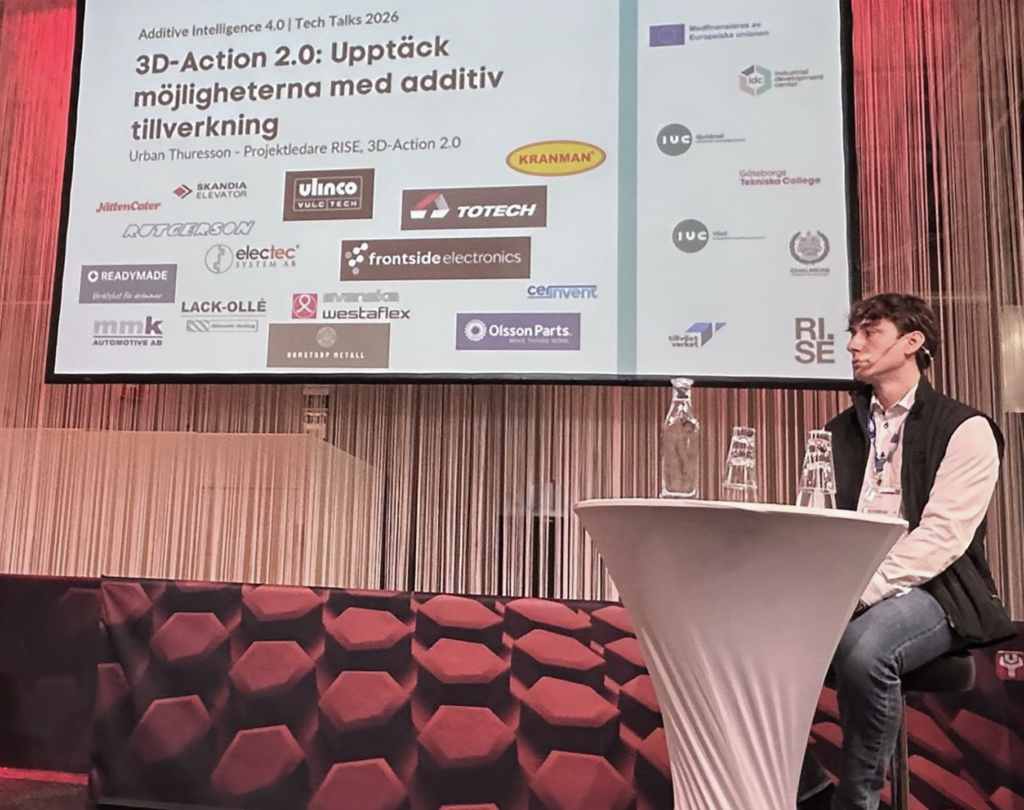
How do you go from an initial investment without a clear plan to making 3D printing a natural part of production and development? That was the starting point when Skandia Elevator took part in the Tech Talk stage at Additive Intelligence 4.0 at Svenska Mässan in Gothenburg.
During the presentation “Adding additive in people and process”, our Production Engineer Filip Larsson shared our journey within additive manufacturing, from the first tests to how the technology is used in practice in our operations today.
“We started without a perfect plan, but with a clear ambition to test and learn. Today, 3D printing is a natural tool in how we solve needs in both production and product development.”
Filip Larsson, Production Engineer
Additive manufacturing has become another valuable tool in our daily work. By working close to our own needs, we can quickly develop solutions that are otherwise not available, while also improving both products and ways of working, for example:
- Custom components for both production and end products
- Rapid development of solutions that are not available to purchase, or more cost-effective alternative
- Increased knowledge of materials and design
- More efficient ways of working
At the Tech Talk stage, several concrete examples were highlighted of how 3D printing creates value in industrial environments, from prototypes to serial production and spare parts. Examples of what we have developed ourselves:
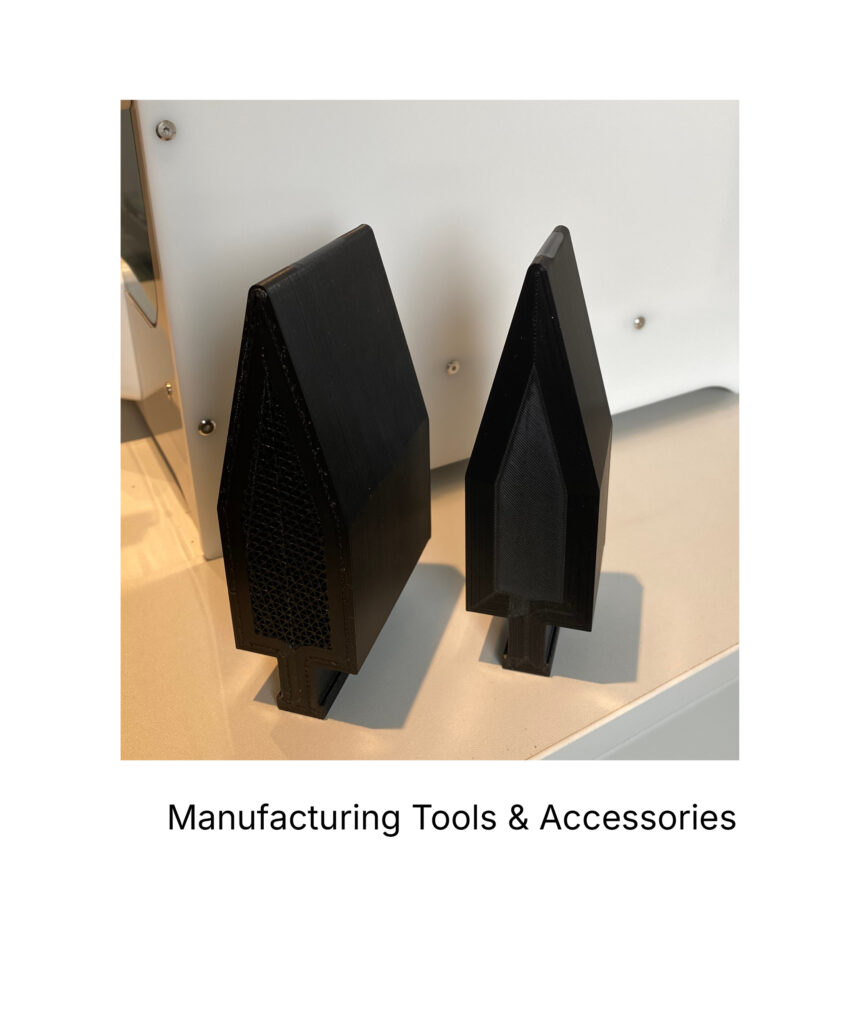
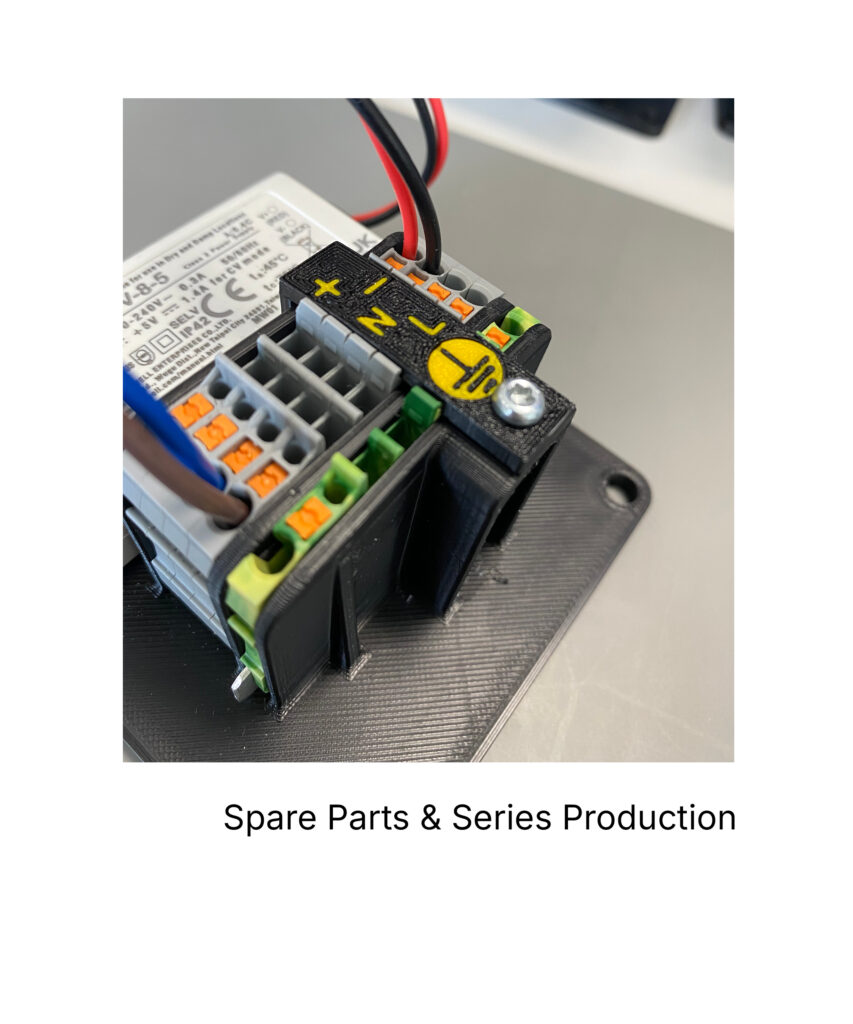
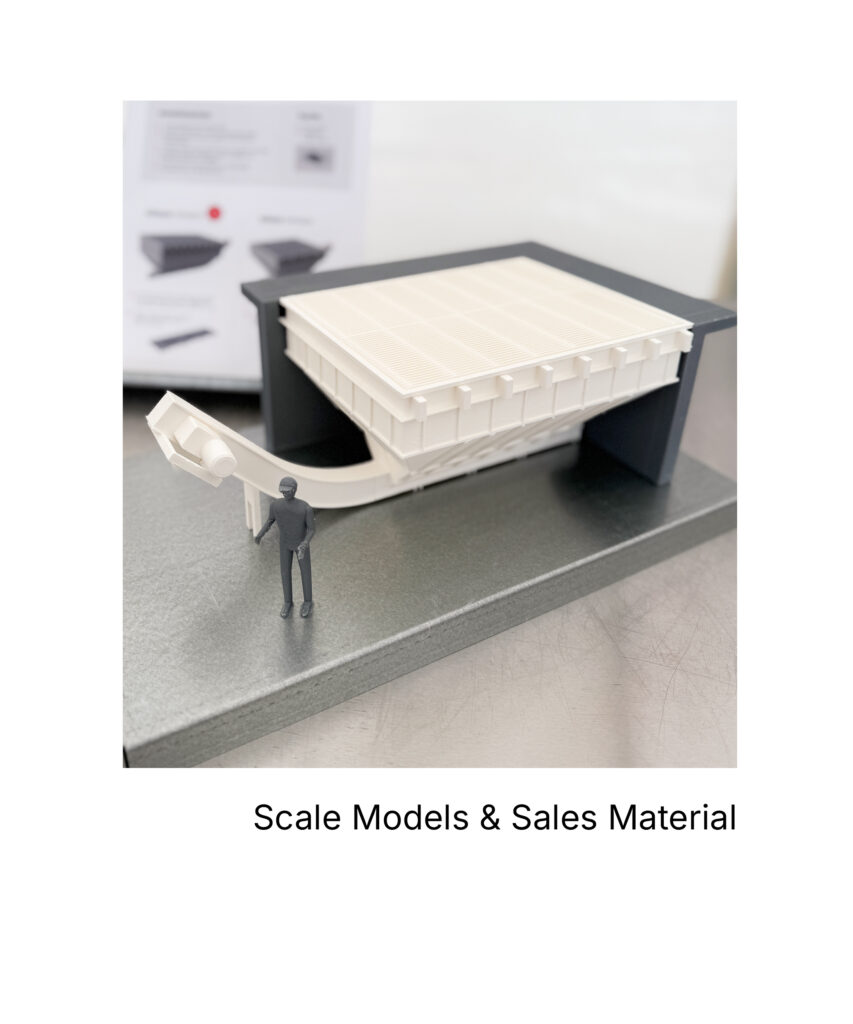
For us, additive manufacturing is about working smarter and solving real needs, with a focus on function and quality. It is also about building a culture where ideas are tested, developed, and turned into reality.
About 3D Action 2.0
3D Action 2.0 is a project where RISE, Chalmers University of Technology, Göteborgs Tekniska College, IDC West Sweden, IUC Väst and IUC Sjuhärad collaborate to offer small and medium-sized companies in the Västra Götaland region a unique opportunity to test and evaluate different additive manufacturing technologies.